This weekend, as we observe Father’s Day and Juneteenth in the United States, it is a good time to update a post we wrote in April 2020 with insights on implications for our careers as we start what appears to be a new technological revolution.
Specifically, what lessons can we learn from our parents careers and others who blazed a trail for our generation? When I reflected on my father’s career, for example, I found that he spent much of his time with one company. Despite this job security, he still recognized the need for indispensable skills. He watched trends in his field, responded to change, and to customer needs.
My six takeaways from my dad’s career, still relevant in 2026 include:
- Make yourself “essential,”
- Complete your education,
- Follow trends and adjust accordingly,
- Be customer-focused,
- Train and mentor, the next generation, and
- Share your knowledge after retirement.
My father entered the workforce as a radiotelegraph operator aboard ocean-going ships before World War II and retired as a telecommunications consultant at the dawn of the World Wide Web era.
Make yourself indispensable.
Dad started his career shortly before the Second World War as a radio operator aboard coastal tankers. Oil tanker shipments drove our economy then and still do today, so the work was essential. But other key jobs became available for those with technical skills when war broke out.
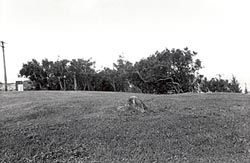
My father had the right skills to fill the need for technical workers shortly after America entered the War. The Army needed radiotelegraphers, but they were not essential enough. Excess operators could be sent to the “ReplDepot,” or Replacement Depot to replace lost infantrymen. As a result, he became a radio repairman for B-17 bombers, and then a radar technician. Our forces could not afford to lose such experts, so he stayed behind the lines. According to my father, he spent much of the war servicing radar sets in Hawaii, including antennas at the iconic Opana Radar Site that detected—but did not correctly identify—an incoming air raid at 7:04 A.M. on December 7, 1941. (My father was there later in the War.).
Complete your education.
Dad returned to civilian work as a radiotelegrapher after the War. He worked at WNY, a ship-to-shore radio station in Manhattan, started a family with my mom, and, somehow, attended City College of New York full-time for his Bachelor of Science degree in Chemistry.
My father remained in telecommunications despite training as a chemist in college. Although he did not directly utilize his chemistry degree, he applied the methodical approach he learned in the lab to problem solving at his jobs and at home.
In addition to providing transferrable skills, the degree qualified my father for supervisory training at his company—and for training in an emerging technology—computers.
Although the job market has seen seismic change since my dad went to school, recruiters and promotion panels still search for candidates with degrees. A recruiter told me that he recognizes many candidates have degrees in fields that differ from the field they work in. As a result, they search for a degree, not the college major.
Follow trends and change as needed.
The advent of new technologies such as geosynchronous communication satellites meant the “writing was on the wall” for marine radiotelegraphers so my father “reinvented himself” as a computer operator. His company, RCA Global Communications or GlobeCom adapted its early computers for TWIX and Telex message switching. Dad qualified for training on the new equipment because he had a college degree and telecommunications experience at the Company. According to my brother, Michael, who worked with my dad, Harold Grossman, our father ultimately supervised more than 60 message switching networks.
Dad was right to make the move. The job of radiotelegrapher was slowly phased out and largely disappeared in 1999. Satellites and digital radio services took over.
Be customer focused.
One of the things that impressed me as a child was my father’s focus on customers. His customers were large multinational companies, including Japanese firms that did much of their messaging during their business day. That is during the night in the United States. As a result, dad addressed customer concerns at any hour of the day or night. If the operator on duty could not fix the problem, dad took the train or drove to the computer room at any hour to make sure the customers got their messages.
Train and mentor the next generation.
Michael and other computer operators that worked for dad remember the training classes he delivered. He insisted that his operators understand computer basics, and not just the commands they had to type.
Today, Michael still remembers the first question our father asked the new operator classes. “What is a bit?”
Share your knowledge after retirement.
Dad remained active in telecommunications after he retired. He installed new message switching systems for companies in the US and abroad. His vast experience convinced customers to avoid costly errors. A major TV network, for example, wanted to install their system without raised flooring that was common in large computer centers. Dad told their management this was a mistake. Eventually, they listened.
Final thoughts
My dad, and many others in the Greatest Generation adapted to massive technological change during their careers. Technology is not standing still today, either, so the current generation is also grappling with tsunamis of workplace change. Satellites and digital communications replaced radiotelegraphy in my father’s time just as AI and other advanced technologies are revolutionizing work today. The lesson I learned and want to pay forward is that the best path is embracing change with the right education and training. Then pass on your expertise to others.



 Guide to the Post-pandemic Job Market


Leave a Reply
You must be logged in to post a comment.